
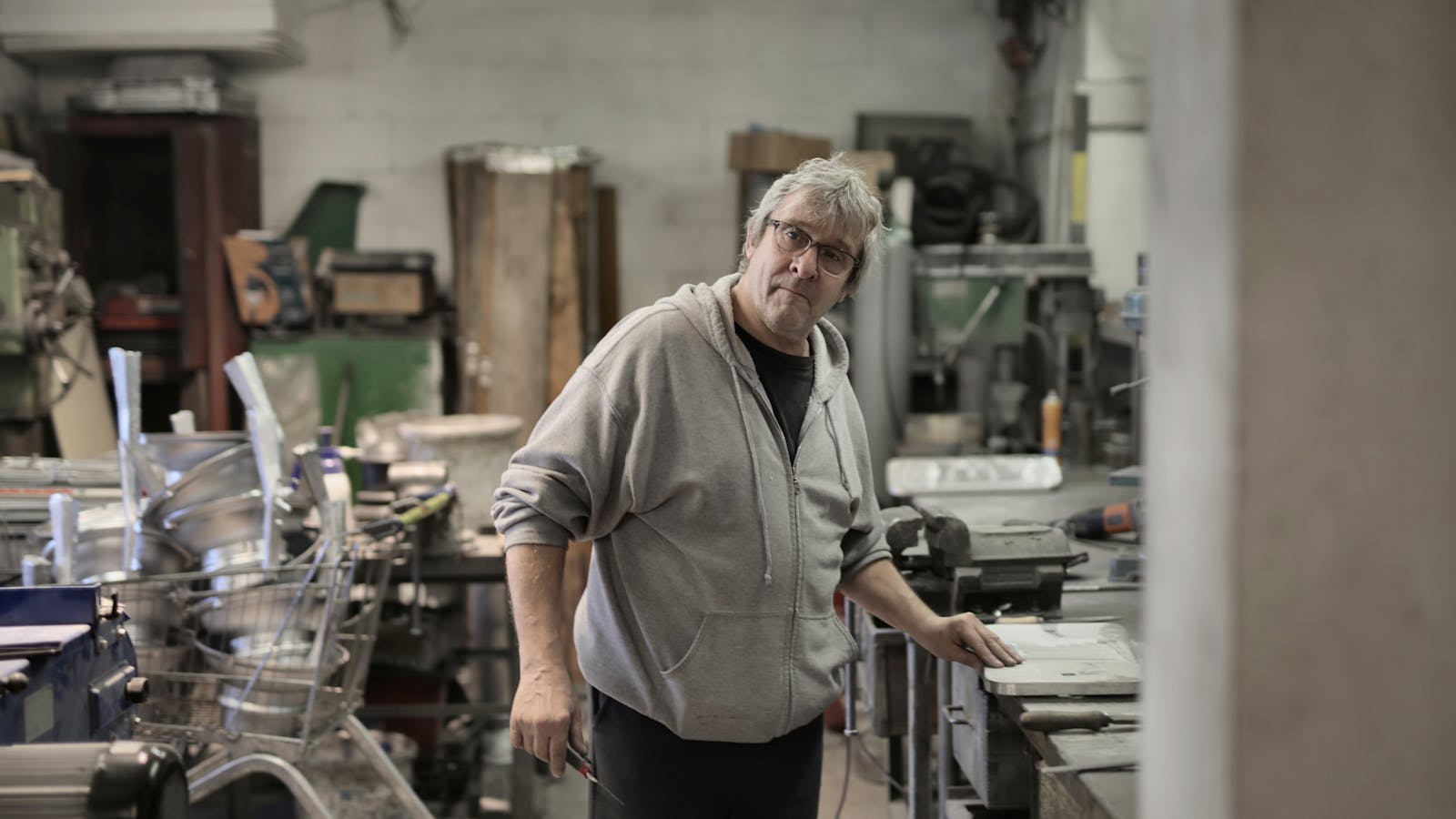
TFSA and RRSP for Manufacturing Business Owners
Maximizing personal tax-sheltered savings alongside corporate wealth accumulation for manufacturing entrepreneurs
For Canadian manufacturing business owners, maximizing both RRSPs and TFSAs is generally advisable to diversify income streams in retirement, but the optimal strategy depends on how you pay yourself through salary versus dividends and your corporation's cash flow requirements.
Manufacturing owners face unique considerations because their businesses are capital-intensive, requiring significant reinvestment that competes with personal savings goals. Understanding how these registered accounts integrate with corporate investment strategies ensures that manufacturing entrepreneurs build personal wealth alongside their business assets.
RRSP Fundamentals for Manufacturing Owners
The Registered Retirement Savings Plan provides manufacturing business owners with a tax-deductible contribution that reduces personal taxable income in the year of contribution, with investment growth compounding on a tax-deferred basis until withdrawal in retirement.
The 2026 contribution limit is eighteen percent of the previous year's earned income, to a maximum of approximately thirty-two thousand dollars. Critically, only salary income generates RRSP contribution room. This requires coordination with your tax planning for manufacturing companies.
TFSA Fundamentals for Manufacturing Owners
The Tax-Free Savings Account allows manufacturing business owners to earn investment income completely free of tax, with no tax on contributions, growth, or withdrawals. The annual contribution limit for 2026 is seven thousand dollars, with cumulative contribution room available for eligible Canadian residents since 2009 totalling over ninety-five thousand dollars.
Unlike RRSPs, TFSA contributions are not tax-deductible, meaning the owner must withdraw after-tax funds from the corporation to make contributions. However, the permanent tax-free status of TFSA growth makes it an exceptionally powerful tool for long-term wealth accumulation.
Salary Versus Dividend Decision
The salary versus dividend decision is the most important factor determining a manufacturing owner's ability to contribute to RRSPs. Paying a salary creates RRSP contribution room and Canada Pension Plan pensionable earnings but triggers payroll taxes including employer and employee CPP contributions.
Many manufacturing owners use a hybrid approach, paying salary up to the maximum CPP contribution threshold and the amount needed to maximize RRSP contributions, then taking additional compensation as dividends.
Corporate Investing Versus Personal Registered Accounts
Manufacturing business owners must evaluate whether surplus corporate funds should remain invested within the corporation or be extracted and contributed to personal RRSPs and TFSAs. Corporate investment income is subject to refundable tax at rates exceeding fifty percent in most provinces, with a portion refunded when dividends are paid to shareholders.
Additionally, aggregate passive investment income exceeding fifty thousand dollars annually reduces the corporation's access to the small business deduction.
RRSP Contribution Strategies for Manufacturing Owners
Manufacturing business owners can optimize their RRSP contributions through several strategies beyond basic annual contributions. Spousal RRSP contributions allow income splitting in retirement by attributing withdrawals to the lower-income spouse after a three-year holding period.
Catch-up contributions using accumulated unused room from years when dividends were the primary compensation method can generate significant tax refunds. The Home Buyers' Plan and Lifelong Learning Plan provide additional withdrawal options for qualifying purposes.
TFSA as an Emergency Business Fund
Manufacturing businesses are subject to cyclical demand fluctuations, supply chain disruptions, and unexpected capital expenditure requirements that can strain corporate cash flow. The TFSA provides manufacturing owners with a personal emergency fund that is completely accessible without tax consequences, unlike RRSPs where withdrawals trigger immediate taxation.
Maintaining a fully funded TFSA provides a personal financial buffer that can be used to inject capital into the business during downturns, cover personal expenses during periods of reduced corporate distributions, or fund unexpected opportunities.
Individual Pension Plans as an Alternative
Manufacturing business owners over age forty should evaluate whether an Individual Pension Plan provides superior retirement savings compared to RRSPs alone. The IPP is a defined benefit pension plan established by the corporation for a single member, typically the owner, with contribution limits that exceed RRSP maximums and increase with age.
For manufacturing owners aged fifty and above, IPP contributions can be fifty percent or more higher than the maximum RRSP contribution, providing accelerated retirement savings funded at the lower corporate tax rate.
Coordinating Registered Accounts with Corporate Surplus
The optimal strategy for most manufacturing business owners involves maximizing both RRSP and TFSA contributions annually while managing corporate surplus through a holding company structure.
The priority sequence typically begins with RRSP contributions to capture the immediate tax deduction, followed by TFSA contributions for tax-free growth, and finally corporate investment of remaining surplus. Pair this with wealth management for manufacturing owners.
Once registered room is fully used, corporate-owned life insurance functions as an additional tax-sheltered bucket for surplus, with the eventual death benefit flowing to shareholders tax-free through the Capital Dividend Account.
More in Manufacturing
Continue exploring topics in this category










Optimize Your RRSP and TFSA Strategy
Ready to optimize your RRSP and TFSA strategy alongside your manufacturing business?
Book a consultation with SG Wealth Management to discuss contribution planning, compensation strategy, and integrated wealth accumulation.